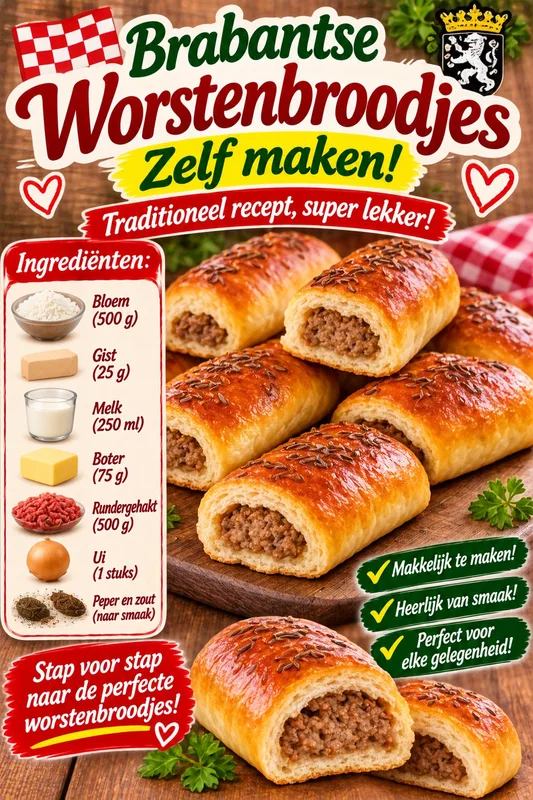
Introduction to Worstenbroodjes Zelf Maken zoals in Brabant
Ah, worstenbroodjes! These delightful little treats are a true taste of Brabant, and I can’t wait to share how to make them yourself. If you’re a busy mom or a professional juggling a million tasks, this recipe is your secret weapon. It’s simple, quick, and oh-so-satisfying. Imagine pulling warm, golden-brown rolls from the oven, filled with savory sausage meat, and watching your loved ones’ faces light up. Whether it’s a cozy family dinner or a snack for the kids after school, worstenbroodjes zelf maken zoals in Brabant is sure to impress and satisfy!
Why You’ll Love This Worstenbroodjes Zelf Maken zoals in Brabant
These worstenbroodjes are not just delicious; they’re incredibly easy to make! With just a handful of ingredients, you can whip up a batch in no time. Perfect for busy days, they’re a fantastic way to bring comfort food to your table without the fuss. Plus, the aroma of baking bread will fill your home, creating a warm and inviting atmosphere that everyone will love!
Ingredients for Worstenbroodjes Zelf Maken zoals in Brabant
Let’s gather our ingredients for these delightful worstenbroodjes! Each component plays a vital role in creating that perfect blend of flavor and texture. Here’s what you’ll need:
- Bloem: The foundation of our dough, providing structure and chewiness.
- Melk: Adds moisture and richness, making the dough soft and tender.
- Boter: A touch of butter brings a lovely flavor and helps create a golden crust.
- Zout: Essential for enhancing the overall taste of the bread.
- Suiker: Just a hint of sweetness balances the savory sausage filling.
- Droge gist: This magical ingredient helps our dough rise, creating that fluffy texture we love.
- Worstvlees: The star of the show! You can use pork, chicken, or even a plant-based alternative for a twist.
- Ei: For brushing on top, giving the rolls a beautiful, shiny finish.
Feel free to get creative! You can swap out the type of meat or even add herbs and spices to the filling for an extra kick. If you’re looking for exact measurements, don’t worry! They’re listed at the bottom of the article for easy printing.
How to Make Worstenbroodjes Zelf Maken zoals in Brabant
Step 1: Prepare the Dough
Let’s kick things off by warming the milk. I usually do this in a small saucepan over low heat. You want it warm, not boiling—think cozy bathwater for your dough! Once the milk is warm, add the butter and let it melt completely. In a large mixing bowl, combine the flour, salt, sugar, and dry yeast. This is where the magic begins! Mixing these dry ingredients well ensures that the yeast gets evenly distributed. Once the butter has melted into the milk, pour this mixture into the bowl with the dry ingredients. Stir it all together until it forms a shaggy dough. Trust me, the aroma of warm milk and butter will make your kitchen feel like a hug!
Step 2: Knead the Dough
Now comes the fun part—kneading! Turn the shaggy dough out onto a lightly floured surface. With clean hands, start kneading the dough by pushing it away from you, folding it back, and turning it a quarter turn. Repeat this for about 8-10 minutes. You want the dough to become smooth and elastic, like a soft pillow. If it feels too sticky, sprinkle a little more flour as needed. Kneading is like giving your dough a workout, and it’s essential for developing that lovely texture we crave in worstenbroodjes. Once it’s smooth, form it into a ball and place it in a lightly greased bowl. Cover it with a clean kitchen towel and let it rest. Your dough is on its way to greatness!
Step 3: Let the Dough Rise
Patience is key here! Allow the dough to rise in a warm spot for about an hour. This is when the yeast works its magic, making the dough puff up like a fluffy cloud. I often place mine near a sunny window or in a slightly warmed oven (just turn it off after warming). You’ll know it’s ready when it has doubled in size. This rising process is crucial for achieving that light and airy texture in your worstenbroodjes. So, take a moment to enjoy a cup of tea while you wait!
Step 4: Shape the Worstenbroodjes
Once your dough has risen, it’s time to shape those delicious rolls! Start by gently punching down the dough to release the air. Then, divide it into equal pieces—about 10 should do the trick. Roll each piece into a small rectangle, about the size of your palm. Now, take a portion of the sausage meat and place it in the center of the rectangle. Fold the dough over the filling, pinching the edges to seal it tightly. This is where you can get creative! If you want to add herbs or spices to the meat, now’s the time. Place each shaped roll seam-side down on a baking sheet lined with parchment paper. They’re starting to look like something special!
Step 5: Second Rise
After shaping, let the worstenbroodjes rise again for about 30 minutes. This second rise is essential for achieving that perfect fluffiness. Cover them with a towel to keep them warm and cozy. You’ll notice they’ll puff up even more, which is exactly what we want. This step is like giving your rolls a little spa treatment before they hit the oven!
Step 6: Bake the Worstenbroodjes
Now, the moment we’ve all been waiting for—baking! Preheat your oven to 200°C (about 400°F). Before placing the rolls in the oven, brush the tops with a beaten egg for that beautiful golden finish. Bake them for 20-25 minutes, or until they’re golden brown and your kitchen smells heavenly. To check if they’re done, tap the bottom of a roll; it should sound hollow. Once baked, let them cool slightly before devouring. Trust me, the first bite will be pure bliss!
Tips for Success
- Always measure your ingredients accurately for the best results.
- Let your dough rise in a warm, draft-free area for optimal fluffiness.
- Experiment with different types of sausage meat for unique flavors.
- Brush the tops with egg wash for a shiny, golden crust.
- Don’t rush the baking time; patience is key for perfect worstenbroodjes!
Equipment Needed
- Mixing Bowl: A large bowl for combining ingredients. A sturdy pot can work too!
- Rolling Pin: For rolling out the dough. A wine bottle can be a fun substitute!
- Baking Sheet: A flat tray for baking. Use a cast iron skillet for a crispy bottom.
- Parchment Paper: To prevent sticking. Aluminum foil can be used in a pinch.
- Kitchen Towel: For covering the dough while it rises. A clean dishcloth works just as well!
Variations
- Herbed Worstenbroodjes: Add fresh herbs like parsley or thyme to the sausage meat for an aromatic twist.
- Spicy Sausage: Use spicy sausage meat or add chili flakes to the filling for a kick of heat.
- Vegetarian Option: Substitute the sausage with a plant-based meat alternative or a mixture of sautéed mushrooms and lentils.
- Cheesy Delight: Incorporate shredded cheese into the sausage filling for a gooey, melty surprise.
- Sweet Variation: For a dessert twist, fill the dough with sweetened cream cheese or fruit preserves instead of sausage.
Serving Suggestions
- Pair your worstenbroodjes with a fresh green salad for a balanced meal.
- Serve with a side of tangy mustard or homemade ketchup for dipping.
- A warm bowl of soup complements these rolls beautifully.
- Enjoy with a chilled glass of apple cider or a light beer.
- For a festive touch, arrange them on a platter with fresh herbs for garnish.
FAQs about Worstenbroodjes Zelf Maken zoals in Brabant
Can I use different types of meat for the filling?
Absolutely! While traditional worstenbroodjes use pork, you can experiment with chicken, turkey, or even a plant-based alternative. Each option brings its own unique flavor!
How do I store leftover worstenbroodjes?
Store any leftover worstenbroodjes in an airtight container in the refrigerator. They’ll stay fresh for a few days. Just reheat them in the oven for a few minutes before serving!
Can I freeze worstenbroodjes?
Yes, you can freeze them! After baking, let them cool completely, then place them in a freezer-safe bag. They can be frozen for up to three months. Just thaw and reheat when you’re ready to enjoy!
What can I serve with worstenbroodjes?
These rolls pair wonderfully with a fresh salad, a bowl of soup, or even some tangy mustard for dipping. They make a great snack or a hearty meal!
How long does it take to make worstenbroodjes?
The total time is about 1 hour and 55 minutes, including rising and baking. But trust me, the delicious results are worth every minute!
Final Thoughts
Making worstenbroodjes zelf maken zoals in Brabant is more than just a cooking task; it’s a delightful experience that brings warmth to your home. The joy of kneading dough, watching it rise, and finally biting into those golden rolls filled with savory goodness is simply unmatched. Whether you’re sharing them with family or enjoying them solo, these treats are sure to create lasting memories. So, roll up your sleeves, embrace the process, and let the aroma of freshly baked worstenbroodjes fill your kitchen. Trust me, your taste buds will thank you!
Print
Worstenbroodjes Zelf Maken zoals in Brabant, eenvoudig en lekker!
- Total Time: 1 uur 55 minuten
- Yield: 10 broodjes 1x
- Diet: Vegan
Description
Worstenbroodjes zijn een heerlijke Brabantse lekkernij die eenvoudig zelf te maken zijn. Dit recept leidt je stap voor stap door het proces van het maken van deze smakelijke broodjes.
Ingredients
- 500g bloem
- 250ml melk
- 50g boter
- 10g zout
- 25g suiker
- 7g droge gist
- 400g worstvlees (bijvoorbeeld varkensvlees)
- 1 ei (voor het bestrijken)
Instructions
- Verwarm de melk en smelt de boter erin.
- Meng de bloem, zout, suiker en gist in een grote kom.
- Voeg de melk en boter toe aan de droge ingrediënten en kneed tot een soepel deeg.
- Laat het deeg 1 uur rijzen op een warme plek.
- Verdeel het deeg in gelijke stukken en rol ze uit.
- Vul elk stuk deeg met een portie worstvlees en vouw het deeg eromheen.
- Leg de broodjes op een bakplaat en laat ze nog 30 minuten rijzen.
- Bestrijk de broodjes met het losgeklopte ei.
- Bak de broodjes in een voorverwarmde oven op 200°C gedurende 20-25 minuten.
Notes
- Je kunt variëren met het soort worstvlees dat je gebruikt.
- Serveer de worstenbroodjes warm voor de beste smaak.
- Bewaar overgebleven broodjes in de koelkast en verwarm ze voor het serveren.
- Prep Time: 30 minuten
- Cook Time: 25 minuten
- Category: Snack
- Method: Bakken
- Cuisine: Nederlands
Nutrition
- Serving Size: 1 broodje
- Calories: 250
- Sugar: 2g
- Sodium: 300mg
- Fat: 10g
- Saturated Fat: 4g
- Unsaturated Fat: 5g
- Trans Fat: 0g
- Carbohydrates: 30g
- Fiber: 2g
- Protein: 10g
- Cholesterol: 30mg